▣Product context
NEXiA is iA’s enterprise pharmacy fulfillment software platform. It orchestrates prescription workflow from intake through fulfillment and integrates with automation hardware. On the machine side, Smart SecurePack needed a clean contract with that software plane—not a local reconstruction of filenames and barcode rules.
I framed and ran this as a cross-domain integration program: provider (software/API) and consumer (hardware) ownership, commitment capture, and verification—so a “narrow” interface change could ship safely across teams on different tools and schedules.
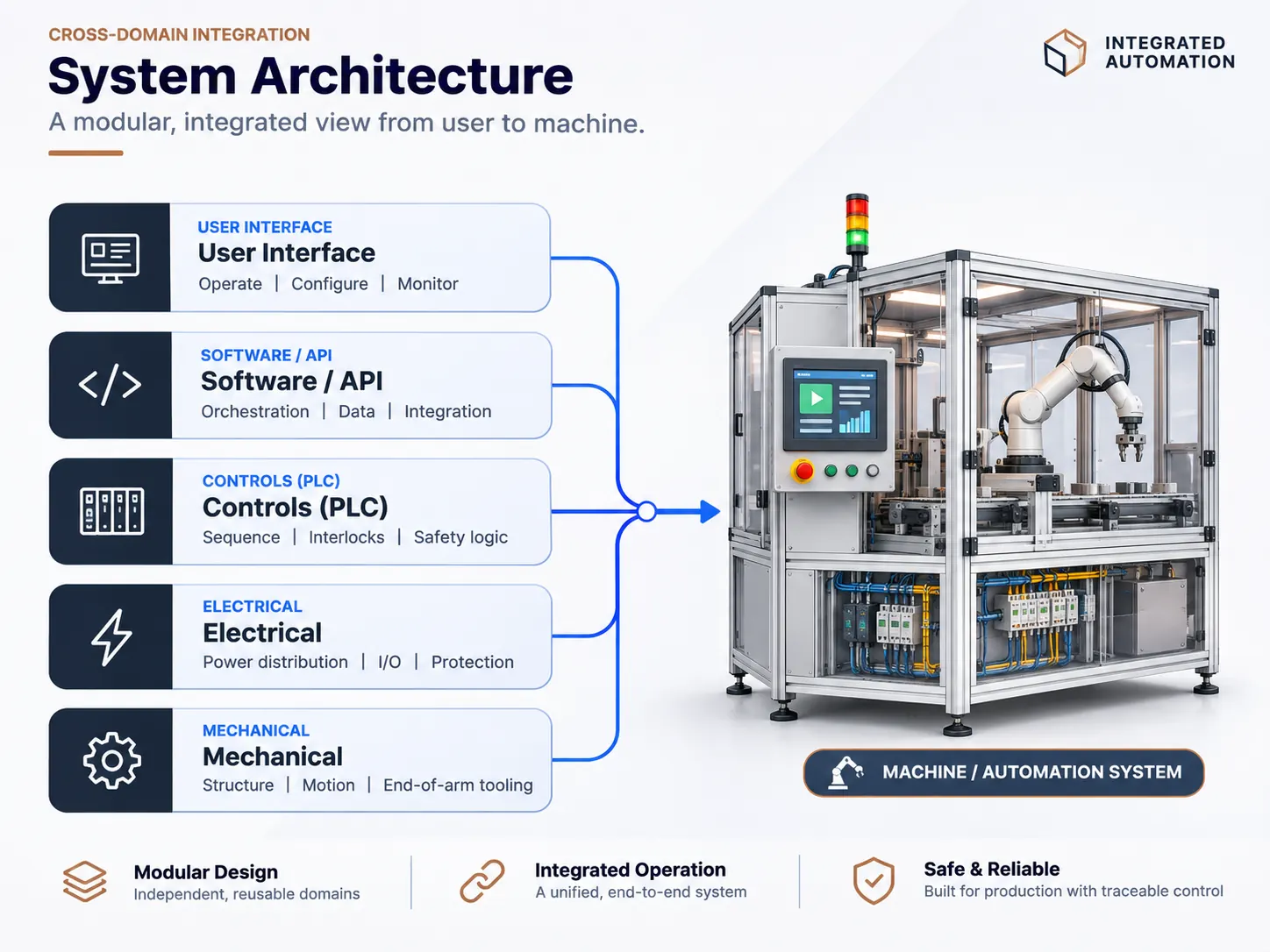
◇A contract with system-level consequences
The change shifted paperwork naming and validation responsibility toward the software API: NEXiA would own the contract for naming and delivery/tracking fields; Smart SecurePack would consume those results rather than rebuild paths from machine-side assumptions.
That touched deployment order, compatibility with installed configurations, troubleshooting playbooks, and order-integrity regression checks. Engineering readiness meant verifying combinations—not celebrating a single code drop.
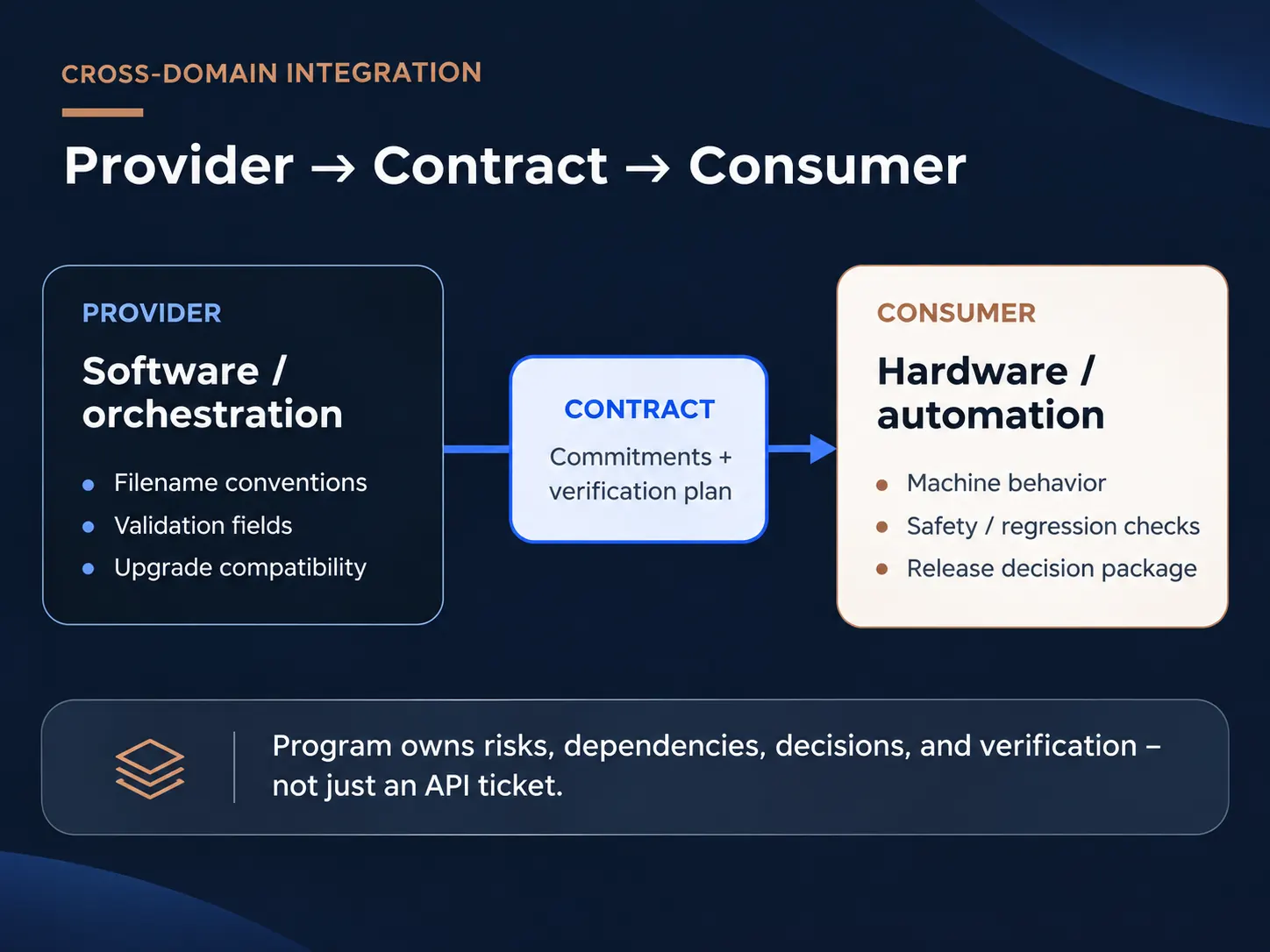
◎What I delivered—and that it shipped
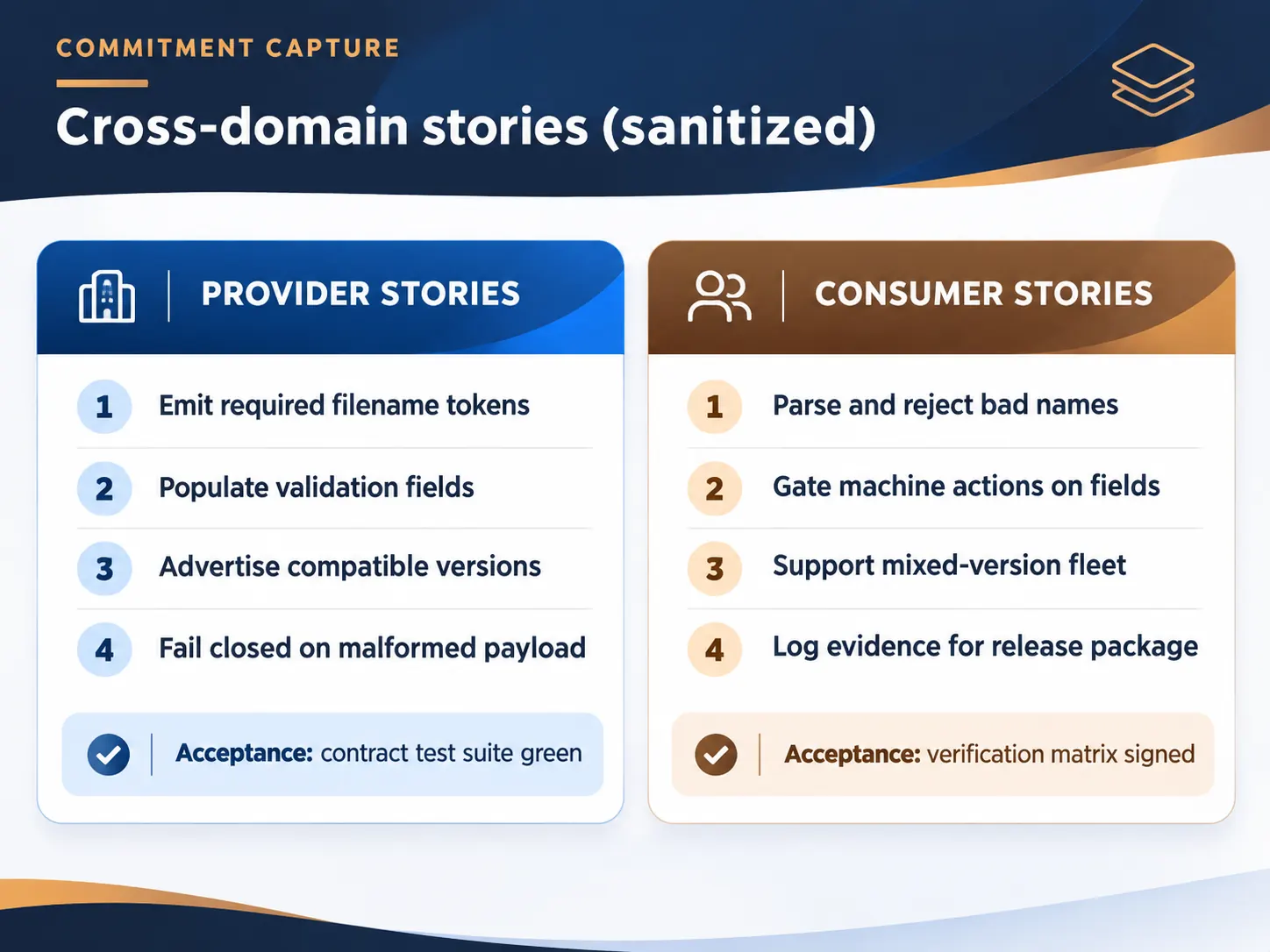
My concrete deliverables were the integration program artifacts: a cross-domain record of risks, dependencies, and decisions, plus the verification plan that made release readiness decision-worthy. User stories defined the provider obligations hardware depended on—without treating the API backlog as the whole program.
Provider vs consumer responsibilities, unresolved hardware scoping, software/product decisions, and open verification questions were separated so meetings produced owners instead of fog. The interface change shipped.
Tradeoffs and judgment calls
Cross-domain integration is a program deliverable. Coding the API was not the program. Owning the risk/dependency/decision record and the verification plan was—so software and hardware teams on different tools could still make a ship call.
Keep executing on the API path while leadership held a strategic decision. Freezing or thrashing the interface work for an unresolved strategic fork would have disrupted ongoing development with no clearer technical outcome in the short term. We continued on the agreed provider/consumer API contract (software supplies naming and validation fields; hardware consumes) and kept verification scoped to that path—so teams could finish, test, and ship without waiting on a strategic choice above the program’s immediate critical path. The strategic option stayed visible as a parked leadership decision, not silent scope creep.
Why that is sound technically: the API path was a complete, verifiable interface for the release; holding execution for a broader strategic direction would have added thrash without changing near-term acceptance criteria. Compatibility/upgrade and order-integrity regressions still gated the ship—we did not skip verification to “go faster.”
Executive reporting: risk/dependency register and active-program status into Director weekly / VP biweekly—same governance pattern as every active hardware program in the portfolio.
Tools & operating systems I put in place
Integration governance artifacts used to earn alignment without authority.
Cross-domain commitment capture
Provider vs consumer ownership, open decisions, and unresolved scoping in one decision-ready record.
Verification / compatibility plan
Upgrade-matrix and order-integrity regressions treated as release requirements.
Risk & dependency register
Made platform and firmware speculation visible so schedule theater could not hide blockers.
Release decision package
Leadership could say go/wait with evidence across software and hardware tools that did not share a backlog.