▣The scope
iA builds software-enabled pharmacy fulfillment platforms—robotics and packaging hardware orchestrated by NEXiA, serving central fill, health systems, retail, and government pharmacies.
Since 05/2024 I own end-to-end execution for 5 concurrent HW/SW programs across a high-value product portfolio, coordinating 20–40 contributors across engineering, manufacturing, supply chain, and quality. Integrated schedules, WBS, dependency maps, NPI readiness, and ECR/ECO/BOM configuration are the baseline. Every active program carries executive reporting: a hardware risk/dependency register plus active-program health into Director (weekly) and VP (biweekly) cadence.
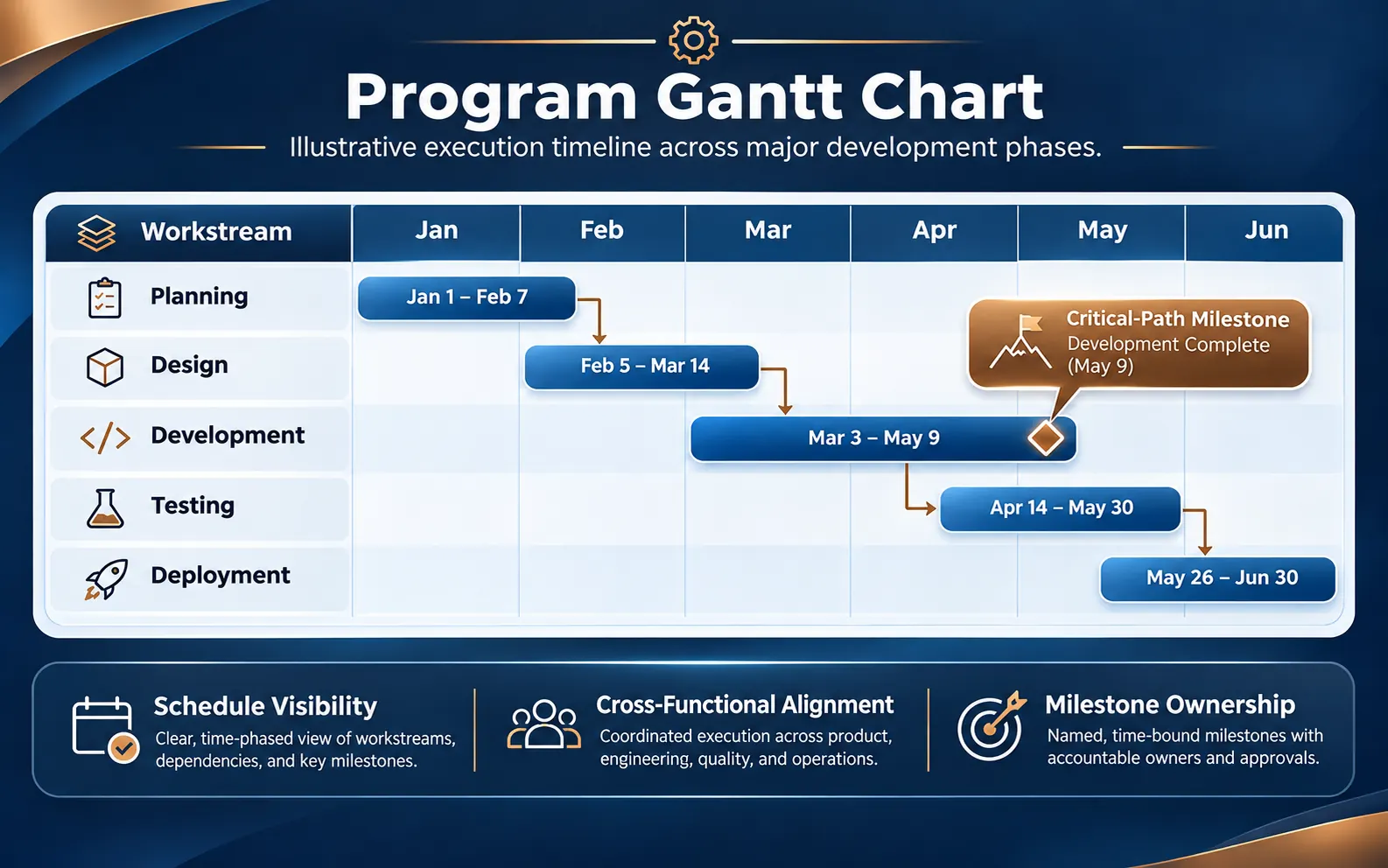
◇Physical builds and product readiness
For Multi-Bagger (Smart SecurePack – Multi), the early engineering machines created a need for explicit deviation handling, commissioning, material sequencing and manufacturing transition. I owned the program (~20–40 person matrix), introduced readiness reviews and handoffs, and tied execution to customer commitments.
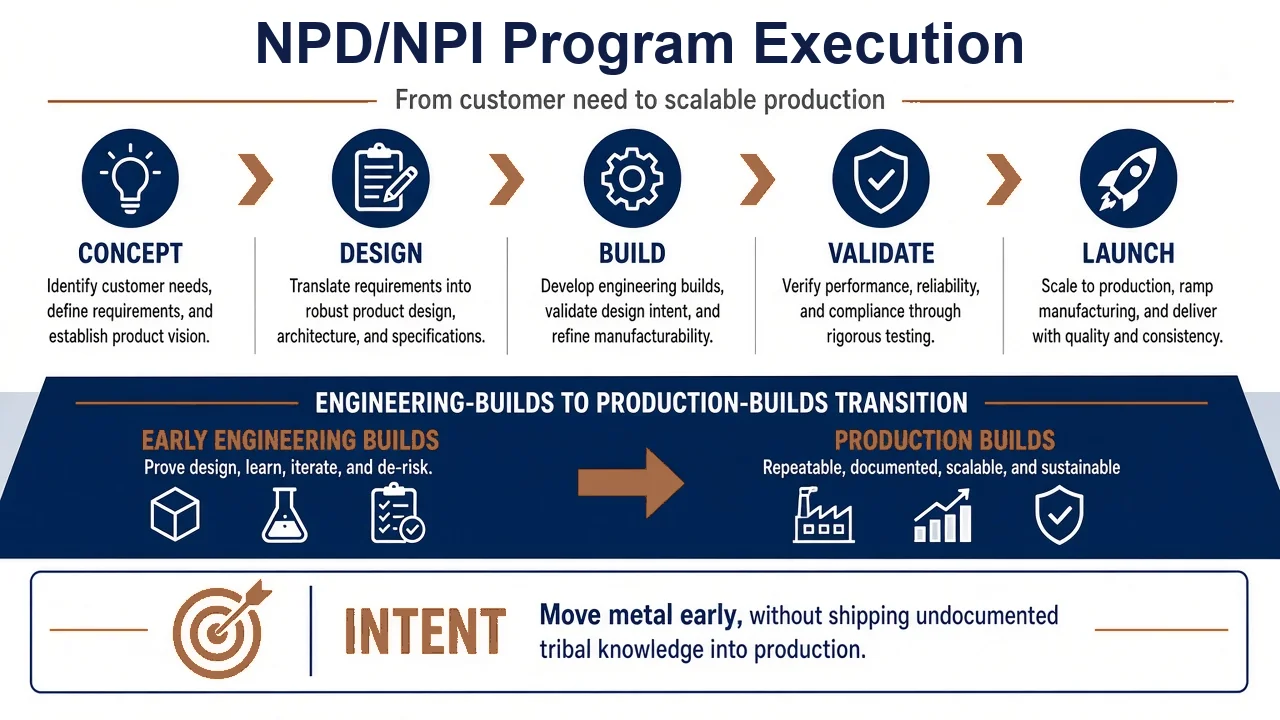
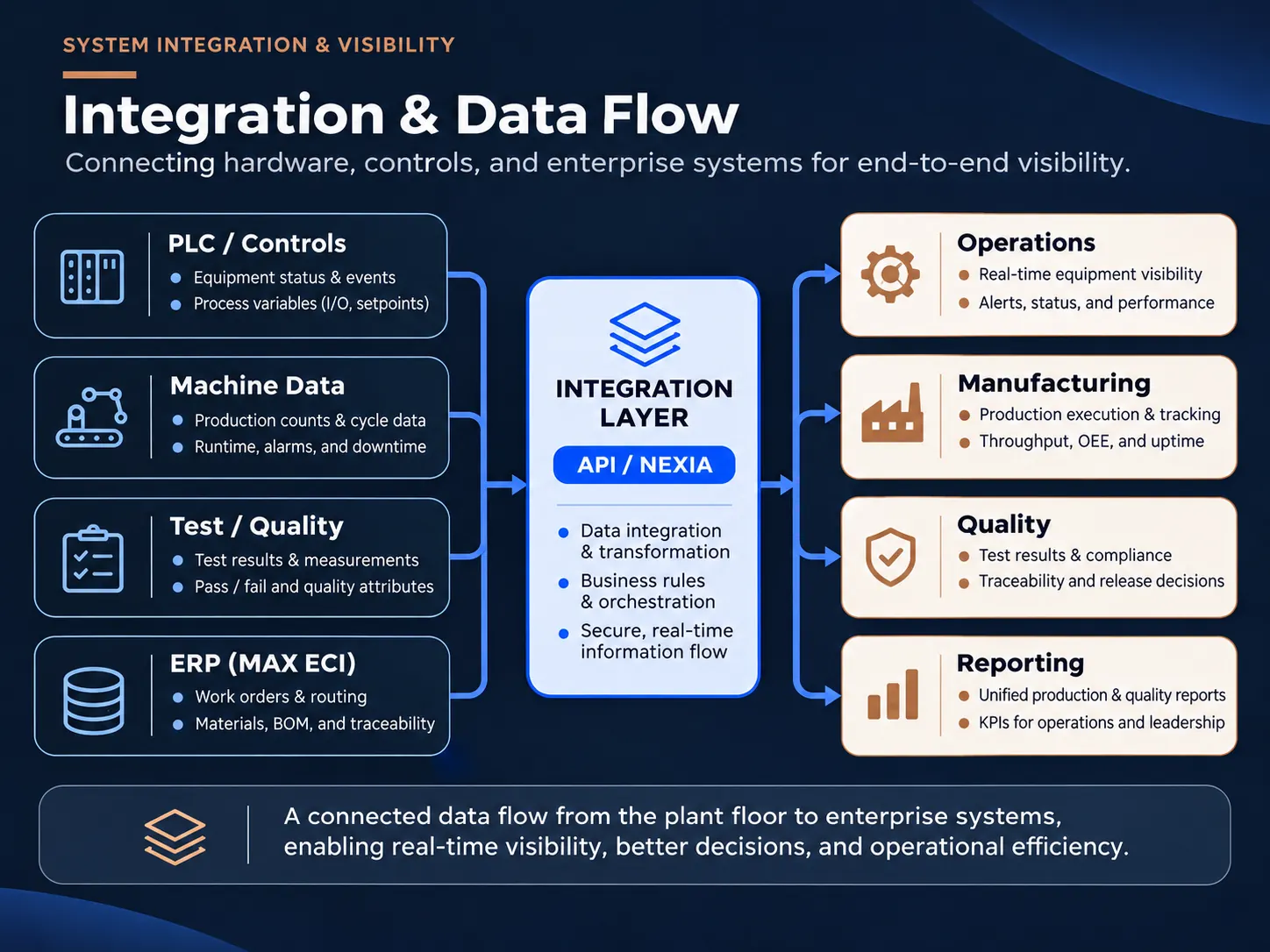
⬡Cross-domain integration is a program
Hardware↔software contract work (file-naming, validation fields, upgrade compatibility) required technical ownership across teams using different delivery systems. I shipped it as a cross-domain integration program—risks, dependencies, decisions, and a verification plan—not as a side effect of an API ticket.
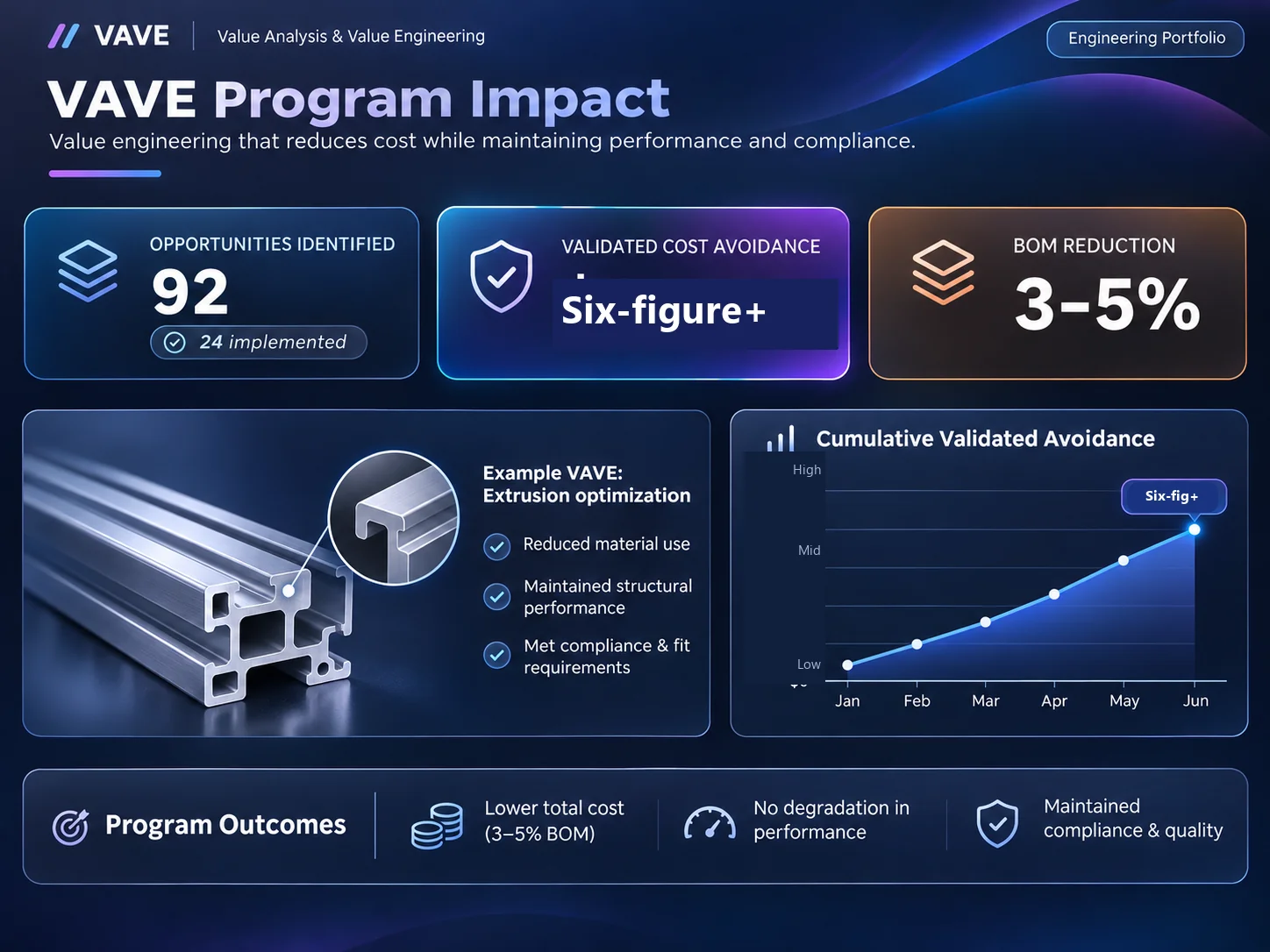
◎Engineering economics and operating systems
I created and operationalized VAVE—intake, opportunity register, gates, and a live savings dashboard—so engineering changes entered a financially validated pipeline. I also deployed capacity-forecasting methods when historical baselines did not exist.
How I run programs
I own the program system—plans, gates, risk/decision packages, verification scope, and clear status—while engineering owns the design. Alignment comes from shared artifacts and honest tradeoffs, not mandate.
Every active program has a hardware risk/dependency register and active-program status, reviewed Director weekly and VP biweekly. Updates are decision-ready (readiness, risks, asks)—not activity lists. Validation and requirements stay scoped to forecasted customer needs; temporary exceptions get a dated end and a reunification plan.
Tools & operating systems across the portfolio
Program systems I stood up—detailed on each deep dive.
Part Viewer — design-to-EC pilot
Claude-assisted UX rebuild · drawing + BOM/where-used · small engineer pre-rollout. Open scrubbed demo →